Is Cleopatra VII remembered for her legendary beauty or her formidable intellect? This captivating exploration reveals a ruler whose true power lay not in seduction but in strategic brilliance, linguistic mastery, and cultural savvy. Far from the mythic image of a glamorous seductress, Cleopatra was a scholar, diplomat, and cunning leader who skillfully navigated the turbulent politics of the ancient world to preserve Egypt’s independence. Her alliances with Julius Caesar and Mark Antony were calculated moves rooted in political acumen, not romance. With fluency in multiple languages and a deep patronage of learning, she merged Egyptian tradition with Hellenistic influence, reinforcing her divine authority through symbols like Isis. This narrative challenges us to reconsider her legacy—was her true influence derived from her mind, or her image? Ultimately, Cleopatra’s story is a testament to the enduring power of intelligence and resilience, proving that genuine leadership transcends superficial allure.
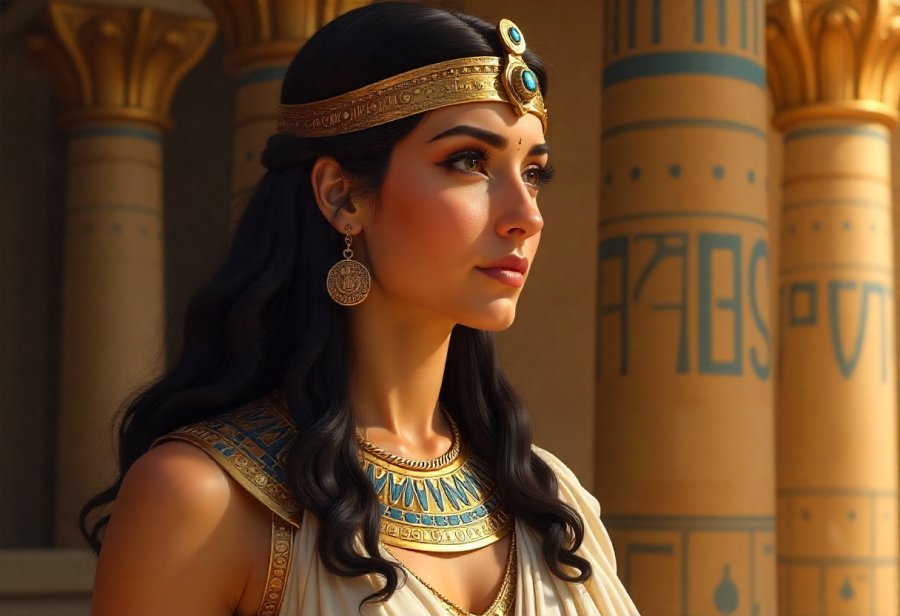
Unveiling Cleopatra: Beyond Beauty and Legend
Cleopatra VII is often remembered as one of history’s most captivating figures, but her true significance extends far beyond her legendary beauty. She was a highly intelligent and strategic leader who skillfully navigated the turbulent political landscape of the ancient world. Her reign marked the final chapter of Egypt’s independence before it was absorbed into the expanding Roman Empire. Far from just a romantic figure, Cleopatra was a scholar, a multilingual diplomat, and a shrewd tactician who relied on her wit, education, and cultural savvy to maintain her power.
Her influence reached across the Mediterranean, where her diplomatic finesse allowed her to forge alliances and manipulate regional politics. Fluent in Egyptian, Greek, Latin, and Aramaic, she communicated directly with a diverse range of leaders and scholars, avoiding reliance on intermediaries. This linguistic mastery not only enhanced her authority but also helped her craft messages that resonated with different cultures, reinforcing her image as an intelligent and capable ruler.
Beyond diplomacy, Cleopatra was deeply committed to learning and culture. She supported the Library of Alexandria and surrounded herself with scholars, believing that knowledge was a vital source of power. Her patronage of the arts and sciences reflected her belief in the transformative power of education, shaping her leadership style. She understood that her legitimacy depended not only on her royal blood but also on her ability to connect with her people through religious symbols and cultural traditions, often aligning herself with Egyptian deities like Isis.
The story of her rise to power is a testament to her sharp political instincts and regional awareness. After her father’s death, she faced internal family rivalries and external pressures. Cleopatra quickly demonstrated her leadership by building strategic alliances, notably with Julius Caesar and later Mark Antony. These relationships weren’t merely romantic—they were calculated moves designed to protect Egypt’s independence and extend her influence, illustrating her mastery of statecraft.
Her legacy is rooted in her ability to balance tradition with innovation. Cleopatra understood the importance of religious symbols and cultural legitimacy, using them to reinforce her divine right to rule. Her intelligence and resilience allowed her to adapt to changing circumstances, maintaining her independence longer than many expected. More than a glamorous icon, Cleopatra’s true power lay in her mind—her education, diplomatic skill, and cultural insight, which left a lasting mark on history.
From Macedonian Roots to Egyptian Throne: Cleopatra’s Origins and Rise
Cleopatra VII was born around 69 BCE into the Ptolemaic dynasty, a Greek family that took control of Egypt following Alexander the Great’s empire fragmentation. Her lineage was Macedonian-Greek, but her family ruled Egypt by blending Hellenistic traditions with native customs, creating a unique cultural landscape. From a young age, Cleopatra received a comprehensive education, mastering multiple languages—Egyptian, Greek, Latin, and Aramaic—and studying philosophy, rhetoric, and science. This broad intellectual foundation set her apart in a male-dominated society and equipped her with the tools to navigate complex political currents.
Her ascent to power was anything but straightforward. After her father, Ptolemy XII, died, Cleopatra initially co-ruled with her younger brother, Ptolemy XIII. Rivalries and internal conflicts quickly erupted, turning the court into a battleground for control. Demonstrating her political savvy, Cleopatra outmaneuvered her rivals through alliances and diplomatic strategies, asserting her authority despite the societal constraints placed on women. Her ability to remain in power relied heavily on her intelligence, regional awareness, and skill in forging coalitions.
Egypt during her reign was a wealthy and geopolitically vital kingdom, caught between the waning influence of Hellenistic culture and the rising power of Rome. As Roman expansion threatened Egypt’s independence, Cleopatra positioned herself carefully, forging strategic alliances to safeguard her realm. Her relationships with Julius Caesar and later Mark Antony were more than personal—they were calculated moves designed to strengthen her position and protect Egyptian sovereignty. These alliances extended her influence across the Mediterranean, illustrating her mastery of regional politics.
The political landscape was fiercely competitive, both within her family and in the broader region. Cleopatra understood that her legitimacy depended on more than royal blood; it required cultural and religious authority. She aligned herself with Egyptian religious traditions, adopting symbols of kingship like the uraeus cobra and associating herself with gods such as Isis. These strategies helped her reinforce her divine right to rule and foster loyalty among her subjects, blending tradition with her modern political acumen.
Her mastery of diplomacy and religion exemplifies her leadership style. Cleopatra was an astute observer of regional dynamics, recognizing that her survival depended on forging alliances and adapting to shifting circumstances. Her relationships with Rome’s most powerful figures were not just personal but vital to her broader strategy of maintaining Egypt’s independence. This combination of political intelligence and cultural awareness made her a ruler whose influence extended far beyond her borders.
Throughout her rise and reign, Cleopatra demonstrated that authority in a turbulent world depended on adaptability, sharp negotiation, and cultural insight. Her ability to navigate internal rivalries, external threats, and shifting alliances showcased her resilience and strategic mind. Far from a mere figure of romance or myth, she was a formidable leader whose legacy was built on her intelligence and political mastery—qualities that allowed her to leave a lasting mark on history.
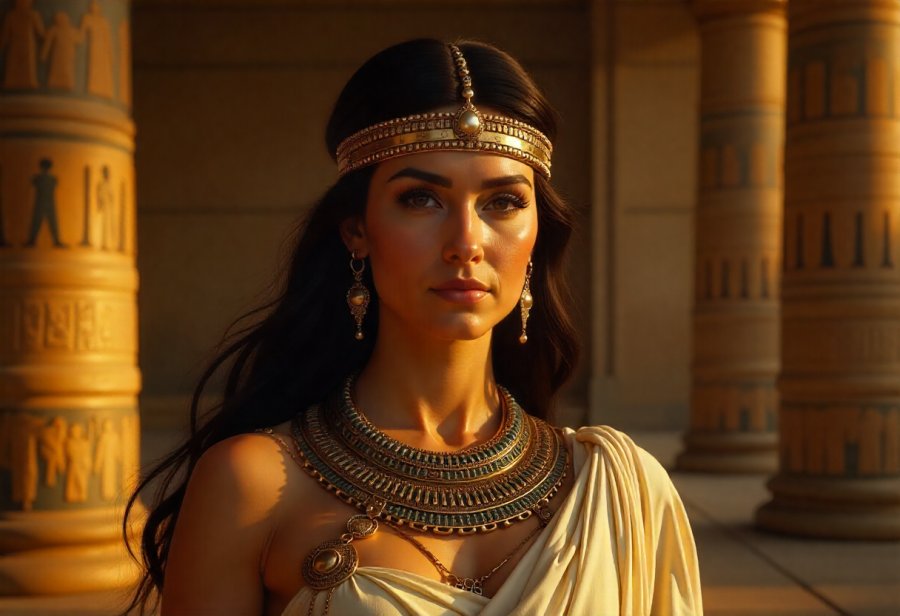
The Scholar Queen: Cleopatra’s Intellectual and Linguistic Mastery
Cleopatra’s reputation as a scholar and linguist stands as much as her political prowess. Fluent in Egyptian, Greek, Latin, and Aramaic, she could communicate directly with a diverse array of diplomats, scholars, and officials, bypassing intermediaries. This linguistic mastery was more than a personal skill; it was a strategic tool that allowed her to craft messages tailored to different audiences, projecting authority and intelligence across cultural boundaries. Her ability to speak these languages fluently helped reinforce her image as a capable and enlightened ruler who understood the nuances of diplomacy and internal governance.
Her education extended beyond language. Cleopatra immersed herself in philosophy, science, and literature, cultivating an environment of learning around her. She was a patron of the Library of Alexandria, supporting scholars and promoting the exchange of knowledge. This patronage reflected her belief that wisdom and education were essential sources of power, shaping her leadership style. By fostering a culture of scholarship, she positioned herself as a ruler committed to cultural and scientific advancement, not just political dominance.
Cleopatra’s scholarly pursuits were deeply intertwined with her legitimacy. Her understanding of Egyptian religious traditions, combined with her Greek education, enabled her to blend cultural symbols and religious authority to legitimize her rule. She adopted the divine image of Isis, aligning herself with Egyptian gods to inspire loyalty and reinforce her divine right to govern. Her ability to interpret complex texts and scientific writings also gave her an edge in diplomacy, allowing her to craft nuanced messages that resonated with different factions and leaders.
Her linguistic versatility played a key role in her diplomatic achievements. Whether addressing Egyptian priests, Greek scholars, or Roman senators, she tailored her language and symbolism to suit her audience. This skill allowed her to build alliances and negotiate effectively, often using cultural references that deepened her influence. Her mastery of communication was instrumental in shaping perceptions—both her own image and the realities of her political relationships—making her a leader whose strength was rooted in knowledge and cultural intelligence.
Culturally, Cleopatra was a master at integrating Egyptian traditions with Hellenistic influences. She embraced religious symbols like Isis to legitimize her divine authority while adopting Greek customs to appeal to her Macedonian-Greek heritage. This cultural intelligence created a leadership identity that embodied both divine wisdom and scholarly sophistication. Her ability to navigate and blend these worlds reinforced her resilience and long-term influence, proving that her true power lay in her mind—her intellect, her language skills, and her strategic use of culture.
Myth Versus Reality: The True Image of Cleopatra in History
Cleopatra’s image has been shaped over centuries by stories, art, and popular culture that often emphasize her beauty and seductive charm. Films, plays, and portraits tend to portray her as a glamorous, manipulative seductress whose influence mainly stems from allure. This stereotype has cemented the idea that her power was rooted in appearance and romantic liaisons with figures like Julius Caesar and Mark Antony. But the surviving evidence tells a different story—coins, busts, and writings depict her as a figure of authority, wisdom, and political skill, emphasizing her intelligence and diplomatic prowess over superficial charm.
The disconnect between myth and reality is striking. Artistic representations, especially in Western media, often exaggerate her beauty to symbolize her influence. Yet, her true legacy is grounded in her ability to lead through knowledge and strategic thinking. Cleopatra was a multilingual scholar, an advocate of science and philosophy, and a skilled diplomat. Her relationships with Rome’s most powerful figures were strategic alliances rather than mere romantic entanglements, designed to safeguard Egypt’s independence. Her leadership was driven by substance—her wit, education, and cultural insight—rather than mere appearance.
Much of her legendary image was amplified by storytellers aiming to craft compelling narratives. The tales of seduction and romance tend to overshadow her genuine achievements, obscuring her role as a capable leader. She leveraged religious and cultural symbols—like her association with Isis—to reinforce her divine authority, blending spiritual legitimacy with political power. These symbols helped her legitimize her rule, but they are only part of a much larger picture rooted in her intelligence and strategic acumen.
Her mastery of image management was a key tool in her success. Cleopatra carefully crafted her identity to project strength, wisdom, and divine right. She understood that perception often shapes reality, and she used religious symbols, royal iconography, and diplomatic gestures to reinforce her authority across borders. Her influence was as much about shaping perceptions as it was about actual political power—an understanding that allowed her to maintain her independence longer than many expected.
In the end, Cleopatra’s story reminds us that history’s most compelling figures are often more complex than legends suggest. While her beauty and charm played a role, her true power lay in her intellect, cultural mastery, and resilience. She recognized that leadership rooted in wisdom and strategic thinking could leave a lasting impact far beyond superficial allure. Her legacy challenges us to look beyond surface impressions and appreciate the substance that sustains true influence—an insight as relevant today as it was in ancient times.
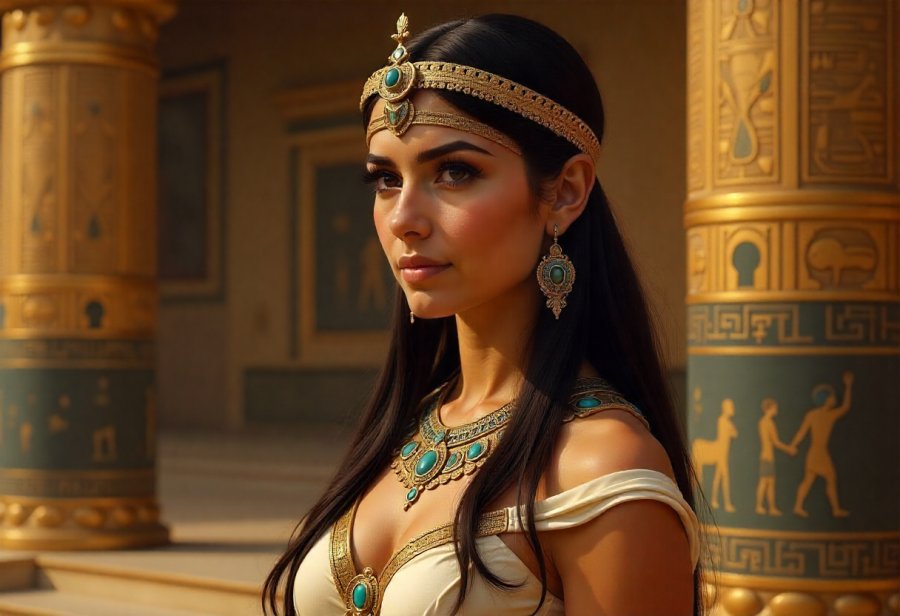
Legacy Reclaimed: The Real Power of Cleopatra’s Mind and Leadership
Cleopatra’s legacy often swings between myth and reality, but peeling back the layers reveals a figure far more complex than the glamourous image history has handed down. While stories of her beauty and seductive charm continue to captivate, her true strength lay not in appearances but in her sharp mind, diplomatic skill, and cultural savvy. Her leadership was rooted in intelligence and strategic thinking—qualities that allowed her to navigate a turbulent world and leave a lasting mark on history.
Her mastery of multiple languages, her patronage of learning, and her ability to blend Egyptian traditions with Hellenistic influences created a leadership style that was both innovative and resilient. These qualities helped her forge alliances and maintain independence in a landscape dominated by male rulers and the expanding power of Rome. Her relationships with Julius Caesar and Mark Antony were strategic moves, but they were only part of a broader effort to protect her realm and project power through knowledge and cultural authority.
Throughout her rise and reign, Cleopatra demonstrated that authority depends less on lineage or superficial charm and more on adaptability, intelligence, and the ability to communicate effectively across cultures. Her understanding of religious symbols and cultural legitimacy reinforced her divine right to rule, extending her influence well beyond the immediate political sphere. Her resilience and capacity to adapt to shifting circumstances show that her true power was rooted in her mind—her education, diplomatic finesse, and cultural insight.
Stories of her seduction and romance often overshadow her genuine achievements, yet they obscure her role as a formidable leader. Cleopatra knew that perception could be as influential as reality, and she skillfully crafted her image to project strength, wisdom, and divine authority. Her influence was built on substance—her knowledge, her strategic use of symbols, and her ability to inspire loyalty—making her a ruler whose legacy endures because of her intellect and resilience.
In the end, Cleopatra reminds us that leadership rooted in wisdom and cultural mastery can leave a more profound and lasting impact than superficial glamour or fleeting alliances. Her story challenges us to look beyond surface impressions, recognizing that true influence comes from understanding, adaptability, and knowledge. She was a woman who used her mind as her greatest asset, shaping history not just through her image but through the enduring power of her intellect.